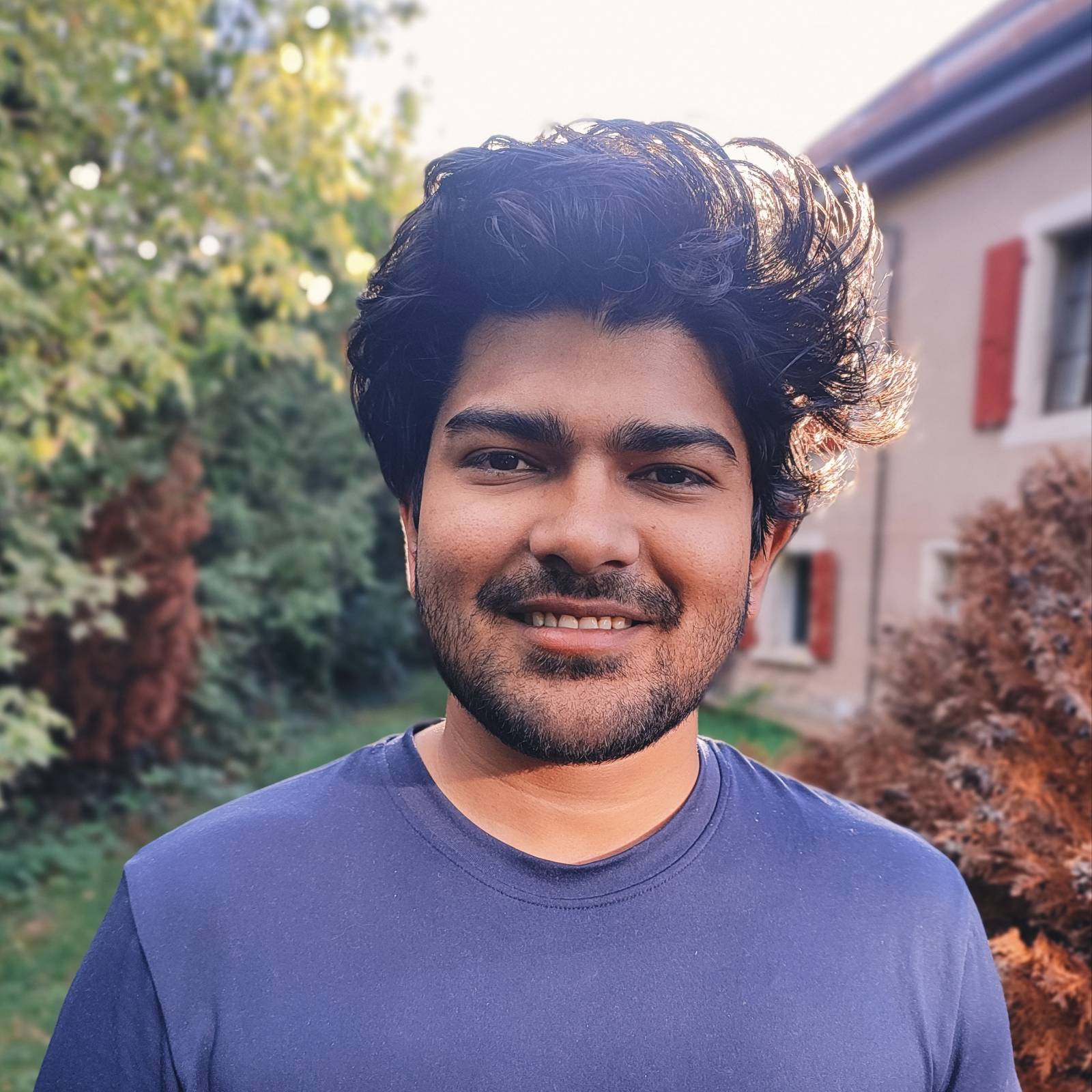
I’m a physicist studying gravity and astrophysics in their most extreme settings — around black holes.
My work ranges from modeling real astrophysical black holes to exploring their deep mathematical structure, using both theory and simulation.
I’ve studied how pulsars orbiting intermediate-mass black holes could produce quasiperiodic oscillations through frame-dragging, and how the Event Horizon Telescope’s images of M87* and Sgr A* reveal the “shadows” predicted by general relativity.
Using those EHT observations, we’ve constrained black hole charge, tested cosmic censorship, and even challenged alternative gravity theories.
I also explore how black holes form and whether their interiors are stable — from the blueshift instability at the Kerr Cauchy horizon to the collapse of stars that may (or may not) hide their singularities.
I coordinate the Gravitational Physics working group for the Event Horizon Telescope (EHT) collaboration.
Highlights from a Recent Project

Hotspots and Photon Rings in Spherically-Symmetric Spacetimes
Ref.: Kocherlakota, Rezzolla, Roy, Wielgus [arXiv:2403.08862]
The image on the left shows many distinct photon orbits around a nonrotating Schwarzschild black hole. As you move from left to right, the light bending becomes more extreme—photons loop around the black hole multiple times before escaping!
This dramatic bending of light produces ultrasharp features in black hole images at high resolution, known as photon rings. Detecting these rings can reveal entirely new aspects of the black hole’s spacetime geometry.
In particular, it may allow us to measure how neighboring photon paths diverge near the so-called photon shell. This divergence rate is set by the critical lensing Lyapunov exponent, a quantity determined purely by the spacetime geometry—completely independent of the messy accretion physics that otherwise dominates black hole images. Measuring it would provide a clean, direct test of gravity itself.
Photons that loop many times around the black hole also take longer to reach the observer than those that travel straight in. This time delay, too, is closely tied to the underlying geometry. Stay tuned for upcoming work that explores how such delays can open up new experimental probes of strong gravity.


CV
The Chennai Mathematical Institute
Since October 2025, I have been an Assistant Professor of Physics at the Chennai Mathematical Institute (CMI) in Chennai, India.
“New” interests include gravitational collapse and the interplay between classical and semiclassical gravity.
The Black Hole Initiative at Harvard University
From 2022 to 2025, I was a Fellow at the Black Hole Initiative (BHI), where my work expanded to include general relativistic magnetohydrodynamics (GRMHD) simulations of hot, magnetized plasma flows in non-Kerr spacetimes [1; 2; 3]. I was also particularly interested in how future black hole imaging experiments can probe gravity in the strong-field regime [1; 2; 3].
The Tata Institute of Fundamental Research (Mumbai)
I completed my graduate studies in the Department of Astronomy & Astrophysics at the Tata Institute of Fundamental Research (TIFR), Mumbai, between 2013 and 2019, earning my M.Sc. and Ph.D. in 2020. My doctoral thesis, On the Stability and Detection of Compact Objects in General Relativity, can be found here.
Chapter 2 of my thesis, which discusses the stability of spacetimes in general relativity, originated from a lecture series I gave at the wonderful 2019 ST4 Conference. It includes a clear and self-contained overview of metric-perturbation theory in curved spacetimes.
The Institute for Theoretical Physics at University of Frankfurt
From 2019 to 2022, I was a Postdoctoral Fellow at the Institute for Theoretical Physics, University of Frankfurt. My work there focused on studying non-Kerr black holes that emerge in alternative theories of gravity and fields, including those predicted in the low-energy limit of string theory. I was particularly interested in how the first high-resolution images of M87* and Sgr A* from the Event Horizon Telescope (EHT) could serve as experimental tests of gravity.
To pursue this line of work, I explored how accretion-disk physics — the non-gravitational degrees of freedom — can affect the way we infer spacetime, using simple toy models [1]. I also developed and explored parametrized black hole metrics to enable model-independent (“theory-agnostic”) tests of strong-field gravity [1].
In 2022, my contributions to understanding the gravitational physics implications of the EHT image of Sgr A* — the supermassive object at our Galaxy’s center — were recognized with an EHT Early Career Award.
The Indian Institute of Technology-Madras
From 2009 to 2013, I studied at the Indian Institute of Technology Madras (IIT-M), where I earned my B.Tech. in Engineering Physics.
My full CV can be found here.
 Prashant Kocherlakota